
Introduction: The Market Isn't Slowing Down, It's Getting Sharper
In 2026, marketing in the self-funded healthcare space will look a lot like the benefits market itself: crowded, complex and ever changing.
The truth is, marketing in this industry has never been about who can shout the loudest. It's about who can make the most sense. As renewal rates rise, buying cycles stretch and technology evolves faster than inboxes can keep up, the opportunity lies in simplifying complexity, elevating credibility and delivering measurable impact.
At Ocozzio, we've spent more than two decades helping self-funded and benefits-focused organizations stay ahead of that curve. We've seen what works, what fades and what's next.
In this blog, we'll break down 7 things the smartest self-funded brands will do differently in 2026, and what they mean for your bottom line. You'll learn how to:
- Use AI, automation, AEO and ethical guardrails to build smarter marketing strategies.
- Strengthen messaging and positioning with outcomes, proof points, brevity and thought leadership.
- Segment by role and readiness to align content with awareness, consideration and decision.
- Lead with stability and trust through renewal-ready messaging and clear data privacy practices.
- Show up where it counts with a consistent omnichannel plan across LinkedIn, email, 1:1 outreach, events and more.
- Elevate credibility with video, motion graphics and boardroom-ready design.
- Measure, refine and improve through insight-driven iteration and practical reflection.
If you're ready to move beyond noise and lead with intelligence, here's what you need to know to market smarter in 2026. Plus, we will dive into why the most successful brands will be the ones who don't just chase trends but define them.
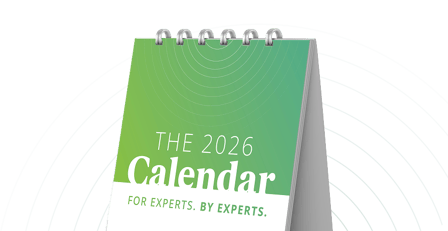
Our 2026 Self-Funded Industry Calendar is now available! Download yours here.
Thousands of self-funded industry leaders use it to stay ahead, informed and ready for what's next in our industry and in B2B marketing!
1. How Are Self-Funded Healthcare Brands Using Technology and AI to Build Smarter Strategies?
How AI Makes B2B Healthcare Marketing More Human
We're already living in the AI era. The brands that stand out aren't the ones using more tools, they're the ones using AI to empower them to be more human. AI can help predict renewal behavior, identify at-risk employer groups and surface broker engagement signals before conversations begin. It can personalize nurture journeys and free your team to focus on the relationships that matter most.
The next generation of marketing and sales performance will depend on collaboration between people and AI, using AI for prediction and people for persuasion. And especially in healthcare, the strength of AI is not in automating communication but in aligning it. The brands that win will not send more emails. They will send smarter, more meaningful ones.
Here are 5 ways that self-funded companies can use platforms like HubSpot to operationalize engagement and bridge common gaps from siloed data to compliance demands, while maintaining a critical human touch. Read the blog here.
What Is AEO and Why Does It Matter in Healthcare Marketing? Spoiler alert: This blog was written to be AEO optimized. Can you spot it?
Answer Engine Optimization (AEO), also known as Generative Engine Optimization (GEO) or Language Model Optimization (LMO), is the next evolution of SEO in an AI-driven world. Rather than ranking for keywords alone, effective AEO content answers real questions in natural language, making it discoverable by both humans and machines.
Discovery now happens everywhere buyers have conversations, from AI chat results and Reddit threads to community platforms and visual search. The modern search journey is no longer linear; it's contextual and conversational.
For self-funded brands, this means structuring content around how executives, brokers and decision-makers actually ask questions: “How do I control rising healthcare costs?” or “What's the real ROI of self-funded plans?”
Optimization is not about algorithms; it's about accessibility. Be the answer buyers are looking for, not the afterthought they scroll past.
Read more about why AEO matters in the self-funded industry here.
How Can Automation Strengthen Strategy Without Losing Human Touch?
Automation should not remove people from the process. It should give them the freedom to think strategically.
Use automation to handle the repetitive tasks: lead scoring, data syncs and reporting. What you gain is not just speed but precision to make sure every message reaches the right audience at the right time in the right tone.
Use automation to connect your systems, not just your emails.
Ocozzio is a Diamond HubSpot Partner, well-versed with in-house experts to help fully set up, optimize and manage your HubSpot. See how we helped one leading TPA quickly and successfully transition from spreadsheets and a disparate sales process with HubSpot in this Case Study.
How Can AI Give You a Competitive Advantage?
While you're building your next campaign, your competitors are most likely refining theirs.
Competitive analysis isn't about reacting in real time. It's about doing the deep, unglamorous research that reveals how your peers position, price and perform. Companies that take this work seriously see what others miss, like the emerging messages, channels and patterns that shape buyer expectations before they're obvious.
AI and automation can lighten the lift, aggregating and analyzing data from multiple sources, but the insight still depends on human interpretation. Strategy lives in the analysis, not the algorithm.
AI can accelerate the process by collecting and interpreting patterns across content, but it also changes the playing field. Through Answer Engine Optimization (AEO), AI now forms perceptions of brands based on everything it can find, from websites and press coverage to online reviews, Reddit threads and community posts. Some of that narrative is within a company's control. Some isn't.
That's why understanding how AI surfaces and summarizes your market is becoming a competitive skill in itself. The smartest self-funded brands won't just monitor competitors. They'll understand how AI presents them and find opportunities to lead with clearer, more credible stories.
Competitor awareness isn't paranoia; it's preparation.
The 4 Ps of Differentiation: How to Compete Beyond Comparison
AI can reveal what competitors claim, but real advantage comes from defining what only you can prove. The most strategic self-funded brands rise above market noise by mastering the 4 Ps of Differentiation:
- Proof: Tangible outcomes that validate credibility and impact.
- Process: The distinct way your organization achieves results.
- Perspective: A thought leadership stance that reframes the conversation.
- Performance: Consistency that can be measured, repeated and scaled.
These aren't just friendly reminders; they're the strategic framework that turns competitor analysis into competitive clarity. When you define these four clearly, both AI and your audience understand why you lead.
The Ethical Edge: Keeping Humanity at the Heart of AI
AI adoption should be transparent! Explain how your organization uses it to enhance accuracy, insight and data accuracy, not to replace relationships. The assurance that real people are still behind your brand keeps trust intact.
2. How Can Self-Funded Brands Use Messaging to Build Trust and Prove Value?
Outcome-Focused Messaging: Lead with What Works
The strongest marketing is written for the client, not about the company. Frame every story around what your audience gains, how it worked and why it mattered.
AI can enhance targeting and efficiency, but empathy and human understanding keep messages real. The future of content is not only intelligent, but also emotionally intelligent.
Every message should answer:
- What did we help someone accomplish?
- Why does it matter?
- How can we prove it?
The same principle applies when communicating about AI. It is important to show that your organization is prepared for tomorrow but positioning AI as a feature rather than a foundation can create skepticism. When efficiency is the focus, buyers naturally ask, “Then why aren't my costs going down?”
Instead, demonstrate how AI strengthens communication, improves service and drives better outcomes. The promise is not automation for its own sake, but intelligence that amplifies human expertise and impact.
And don't forget to write like you speak: clear, confident, and human. Simplicity signals confidence, reality builds trust and humanity sustains it.
From Vendor to Partner: Show, Don't Tell, Your Value
The self-funded industry does not need more vendors. It needs partners who think beyond transactions and lead with strategy.
Being viewed as a partner is not about claiming expertise. It is about consistently demonstrating it. The difference shows up in how you frame challenges, how you advise before being asked and how clearly you connect decisions to outcomes.
Stop explaining your value and start showing it in action. Every proposal, LinkedIn post, case study and renewal conversation is an opportunity to reinforce that you understand the business, the market and the long-term implications of each choice.
When businesses show up with insight, accountability and follow through, they earn a seat at the decision table and keep it.
Thought Leadership as the New Lead Generation
Trust is the real conversion metric. Executives follow people before they follow brands.
Consistent thought leadership grounded in data, industry insight and bold ideas builds influence and accelerates opportunity. Post as needed, say more each time and make your perspective impossible to ignore.
In 2026, buying decisions will be shaped more by peers than promotions. The most trusted self-funded organizations will empower clients, partners and their own teams to share real experiences that validate performance and purpose. Authentic voices build trust faster than any campaign, making peer influence one of the strongest proof point of all.
How Do You Turn Industry Buzzwords into Real Proof?
Words like “flexible,” “transparent” and “custom” are not bad. They are simply incomplete. In a market where most TPAs and vendors use the same icons and language, sameness is easy while differentiation takes work.
Real separation happens in what you can prove and who delivers it. Brokers and employers are buying both the solution and the people behind it. Proof points, measurable outcomes and the personalities that drive results turn generic promises into reasons to believe.
Every claim should have a number behind it. In 2026, storytelling backed by measurable outcomes will separate credible brands from forgettable ones.
How to test your message:
- Can a competitor make this same claim?
- Do we have data or a story that proves it?
- Does this reflect both our results and our relationships?
When buzzwords become backed by evidence, they shift from cliché to credibility.
Say More with Less: Use Clarity as a Competitive Advantage
Decision-makers in the self-funded space do not have time for long explanations or abstract claims. They want clarity, fast.
The brands that stand out will be the ones that communicate complex value simply and memorably.
Why it matters:
- The self-funded market is crowded with similar promises. Short, sharp messaging breaks through.
- Executives read fast, scroll faster and remember what's easy to understand.
- AI-powered search and Answer Engines now reward structured brevity, meaning clear, contextual answers rank higher.
What it means for 2026:
- Replace long copy with short, strategic storytelling. Lead with what matters most to your audience, not what matters most to your company.
- Use modular content like tight paragraphs, clear subheads and concise proof points to help both humans and AI digest information quickly.
- Build scannable experiences: key data, outcomes and benefits should stand out immediately.
- Keep long-form pieces purposeful. Readers will give you their time only if you reward it with real insight, not repetition.
Can Humor and Curiosity Actually Work in B2B Healthcare?
In 2026, B2B healthcare marketing will start sounding a little more human and that's a good thing! Humor and curiosity, when used intelligently, are no longer risks, but tools for connection.
The decision-makers you are speaking to, like CEOs, CFOs and brokers, have read a hundred serious emails and sat through a hundred serious decks this week. A message that makes them pause, smirk or catches them off guard earns attention.
Why it matters:
- Humor disarms complexity. It makes technical topics approachable without sacrificing credibility.
- Curiosity builds engagement. Questions, contrasts and smart phrasing invite readers to lean in instead of scroll past.
Learn more about how curiosity can spark better questions and inspire action here.
- Authenticity outperforms automation. Buyers trust messages that sound human, not manufactured.
- Confidence shows through personality. Self-funded brands that reveal some character are seen as confident, not careless.
Professional does not have to mean predictable. The B2B healthcare brands that dare to be a little more human will be the ones people actually remember.
In 2026, the message that lands fastest will be the one that lasts longest. Learn how to implement brevity without sacrificing impact here.
3. How Should You Adjust Messaging Across Each Stage of the Funnel?
Segmentation cannot stop at job titles. It must also reflect mindset and intent. A CFO, broker and HR Director each view challenges and solutions through a different lens.
- Awareness Stage: Educate through insights and emerging trends.
- Consideration Stage: Validate through proof, comparisons and clarity.
- Decision Stage: Simplify the choice by using visuals, data and direct human follow-up.
When your messaging aligns with both who your audience is and where they are in the buying journey, they feel understood instead of targeted. Self-funded brands that simplify complexity and make validation easier empower decision-makers to move forward with confidence, not hesitation.
Want to see how segmentation actually drives measurable results? See how this strategy delivered a 361% increase in website conversions and more than doubled the amount of deals YoY for one of our clients. Read the case study here.
4. How Can Self-Funded Brands Build Stability and Trust in an Uncertain Market?
Position Stability as a Strength, Not a Slogan
Rising renewals aren't just numbers on a spreadsheet. They're real challenges for employers trying to plan ahead in an unpredictable market. For many, each renewal season brings more uncertainty, not less.
That's exactly where self-funded organizations can step in with confidence and empathy. Instead of treating volatility as a sales opportunity, position your message around control, predictability and partnership.
You're not minimizing their frustration. You're offering clarity in the chaos.
When the conversation shifts from “how much more this year” to “how can we make next year smarter,” that's when your story resonates.
Why Is Data Privacy Now a Key Differentiator in Healthcare Marketing?
In healthcare marketing, compliance is expected, communicating it clearly is not.
Explain how your organization handles data, protects information and upholds trust. Transparency around data use and security turns a basic expectation into a true differentiator.
As AI shapes perception and decision-making, trust depends on verifiable data and open communication. In healthcare marketing, transparency is no longer a box to check. It's a core driver of conversion and credibility.
Your ability to safeguard information does more than protect your clients, it strengthens your reputation and proves reliability in a market built on trust.
5. Where Should Self-Funded Brands Focus Their Marketing Efforts in 2026?
Omnichannel marketing does not mean being everywhere. It means being present where it counts.
- LinkedIn: Share your team, insights and outcomes, not just product or services announcements.
Unlock the power of LinkedIn with our on-demand training, tailored for B2B Healthcare leaders. Get started here.
- Email Marketing: Personalize by audience and funnel stage.
- 1:1 Outreach: Make every message feel human, not automated.
- Conferences & Events: Participate intentionally with meaningful sponsorships and in panels and roundtables when possible.
We've got a full list of 2026 self-funded conferences for you here.
- Speaking Opportunities: Teach, don't pitch!
- Industry Media & Podcasts: Use trusted channels to grow your credibility.
- Your Website: Use is as your proof hub with case studies, insights, resources and outcomes easily accessible in one place.
Omnichannel marketing works best when every channel sounds and looks like the same trusted voice.
6. How Can Creative and Design Influence Executive Perception?
Why Video and Motion Graphics Are Dominating B2B Healthcare Marketing
Attention spans are short, which makes visual communication essential. Executives retain up to 60% more information when it is delivered through motion and sound compared to static text.
For self-funded healthcare brands, video is not about production value for its own sake. It is about clarity, credibility and speed to understanding.
Short, strategic video and motion graphics help brands:
- Communicate complex topics faster, from plan design to outcomes and performance
- Build trust by putting people, expertise and explanation front and center
- Make data easier to understand and remember through visual storytelling
- Reduce friction for buying committees by aligning stakeholders quickly
Motion graphics are especially effective for simplifying dense information such as claims data, renewal strategy or care navigation workflows. Instead of asking buyers to interpret charts and spreadsheets, video shows them what matters and why.
As buying cycles lengthen and decision groups grow, video also scales expertise. It ensures your message stays consistent across sales conversations, broker discussions and internal reviews without losing nuance or intent.
Learn how to make video work harder for your brand, from concept to production and distribution, here.
Design That Signals Sophistication and Experience
In the self-funded healthcare market, design is not decoration. It is a credibility signal.
You can have the strongest strategy in the room, but if your materials feel dated, cluttered or inconsistent, decision makers may question your operational maturity before they ever question your ideas.
Executive audiences subconsciously evaluate visual quality as a proxy for how an organization thinks, operates and delivers. Strong design communicates clarity, reflects discipline, and signals experience.
Strong healthcare marketing design does more than look good. It helps buyers:
- Quickly understand complex offerings without added explanation
- Navigate information with confidence instead of confusion
- Trust that the organization behind the message is organized, prepared, and capable
- Feel comfortable sharing materials internally with leadership and finance teams
When buying decisions often involve CFOs, boards and consultants, materials must be boardroom ready. That means every slide, proposal and web page should feel intentional, aligned and easy to defend.
Design also plays a critical role in differentiation. When many vendors say similar things, visual clarity and consistency help your message stand out without adding noise. The goal is not flash. The goal is focus.
7. Measure, Refine, Repeat: The Feedback Loop of Smarter Marketing
Turn Data into Insight and Insight into Action
The best marketers do not execute once, they evolve continuously.
Every campaign, email and social post is data waiting to be translated into insight.
The real advantage is no longer in who collects the most data, but in who can interpret and act on it faster. Modern dashboards make that possible, giving teams the visibility to adjust creative, spend and channel mix in real time.
The smartest self-funded brands use data as an ongoing conversation, not a conclusion. They track performance, analyze engagement, and refine every step forward.
Agility now defines competitiveness. Organizations that test, learn, and adapt quickly will outperform those still waiting for perfect conditions.
The advantage lies in adaptive systems, not static strategies. Teams that treat iteration as part of their process, not an afterthought, sustain momentum even in unpredictable markets.
Progress Comes from Reflection, Not Reinvention
Growth does not happen at sprint speed. It happens through consistent, thoughtful reflection.
The most effective self-funded brands in 2026 will not chase what is new for the sake of change. They will take the time to understand what is working, why it works and how to make it better.
Set aside space to review campaign outcomes, content performance and audience engagement with honesty. Ask not only what performed, but what resonated. Combine data with feedback from brokers, clients and team members to uncover insights that algorithms alone cannot reveal.
The most resilient brands are not the fastest movers, they are the fastest learners. Reflection is the new growth engine.
Progress is not found in constant reinvention. It is built through deliberate improvement.
How Will Adaptive Intelligence Shape the Future of B2B Healthcare Growth?
In 2026, success in the self-funded healthcare market will belong to companies that master adaptive intelligence: the ability to learn, pivot and personalize in real time.
Growth will not come from predicting every change, but from responding faster and smarter to the ones that matter.
AI-driven insights will power more precise strategies, while human creativity ensures those strategies connect with people, not just data.
The brands that evolve continuously will set the pace for our industry's next chapter.
Conclusion: The Brands That Think Like Partners Will Win
B2B healthcare marketing in 2026 is not about doing more, I's about doing it smarter, clearer and with purpose.
The strongest brands will focus on clarity over complexity, consistency over chaos and connection over campaigns. They will build trust through partnership, not just performance, and they will show, not tell, why they deserve a seat at the decision table.
At Ocozzio, we help self-funded and benefits-focused organizations nationwide turn industry nuances into competitive advantages to fuel sales pipelines, convert decision-makers and drive revenue growth.
