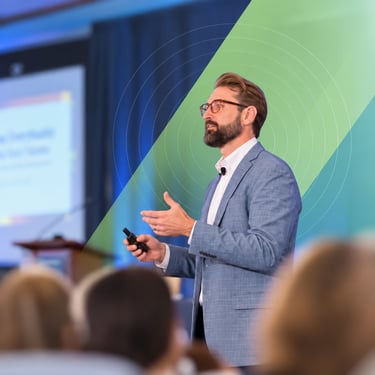
I left the SPBA Fall Meeting with a lot of notes. But the more I looked through them, the less interested I was in writing a session-by-session recap.
The more useful takeaway was how much the conversations connected.
We talked about AI, data infrastructure, IDR, specialty pharmacy, pharmacogenomics, GLP-1s, compliance, member experience and changing broker expectations. Those sound like separate issues. They really aren’t.
The role of the TPA is getting bigger. The amount of information required to do the job well is getting bigger. And the burden of proving your value to brokers and employers is getting bigger right along with it.
That’s the thread I kept hearing.
TL;DR
A few themes kept connecting across the SPBA Fall Meeting. Here’s where I’d focus:
-
TPAs are being asked to do more. The opportunity is increasingly in the 20% that makes your organization meaningfully different.
-
Data has to help people make better decisions. More data isn’t the goal. Getting the right information to the right person early enough to act on it is.
-
AI is moving into the actual work. The useful conversation is shifting from whether to use AI to where it can remove tedious work without replacing human judgment.
-
Cost management is facing a harder test. Employers will keep asking what something costs, but increasingly they’ll also want to know what they got for the money.
-
Being good isn’t enough if nobody understands why. Brokers are researching differently. TPAs need to be specific, useful and easy to understand before the first conversation ever happens.
The TPA can’t be the place where claims simply get processed
The Market Trends panel probably put the sharpest point on this.
TPAs are being asked to connect more vendors, ingest more data, help manage costs, support members and accommodate increasingly customized plan strategies. Meanwhile, brokers are bringing more point solutions into the equation and employers expect those pieces to work together.
That changes the job.
One comment from the panel stuck with me: 80% of what TPAs do may be largely the same. The opportunity is in the other 20%. The point was that TPAs need to identify and expand the part of their business that actually separates them.
So where does real TPA differentiation come from?
I’d look at the moments where the standard process stops being standard:
-
A difficult claim needs attention
-
A vendor fails or underperforms
-
A member needs help getting to the right resource
-
A broker brings you a plan design that doesn't fit neatly into the usual box
How your organization handles those moments tells me far more than “high-touch service” on a sales sheet ever will.
If your difference only exists in a deck, it probably isn't much of a difference. We’ve written more about this specifically for TPAs in our guide to marketing TPA services.
Data is becoming an operating capability, not a reporting function
There was a lot of AI talk at SPBA, but I came away thinking more about data.
The Market Trends panel challenged TPAs that still rely heavily on their claims system as the center of their data strategy. As pharmacy, clinical and point-solution data multiply, TPAs need infrastructure that lets them bring information together and move it quickly.
Then the IDR panel made essentially the same argument from another direction.
Eligibility challenges, negotiation history, provider behavior, deadlines, outcomes and market benchmarks all become more useful when they can be captured and turned into the next decision. The speakers repeatedly came back to “data, data, data.”
What makes a TPA data strategy useful?
Not another dashboard.
It’s whether the right person can get the right information early enough to make a better decision. Can you identify a pattern? Challenge something? Give a broker context before renewal? Hold a vendor accountable?
That’s when the data starts earning its keep.
AI is getting much more practical
I was glad the AI conversation moved beyond “everyone needs an AI strategy.”
SPBA's AI Task Force got into actual work: comparing plan documents, supporting claim builds, creating policies and procedures, reporting and training. Just as important, the group kept coming back to human review, testing, vendor oversight and defined rules for appropriate use.
One comment summed it up well: “You're not replacing a human. You're helping a human do their job.”
I think that's a much more productive conversation.
The organizations that get real value from AI probably won't be the ones with the longest list of tools. They'll know where a machine can remove tedious work without handing over judgment that still belongs to an experienced person.
And there’s another wrinkle TPAs should pay attention to: your members, clients and brokers have AI too.
The task force pointed out that members can already use it to question a denial or research whether their coverage was handled correctly.
The information imbalance is shrinking.
That same shift is happening on the commercial side. Buyers are increasingly using AI alongside search, websites, LinkedIn and peer recommendations to research companies before they ever raise their hand. We’ve gone deeper on how that affects SEO, AEO and GEO and the broader digital marketing ecosystem.
Cost management is moving toward a harder question
Several clinical sessions landed on essentially the same issue.
With specialty pharmacy, the question was whether an expensive medication is producing the intended clinical result, rather than stopping at whether it was appropriate to prescribe.
The GLP-1 discussion broadened that idea further. Pharmacy strategy, weight management, disease management and other programs can't operate as disconnected pieces if the goal is to understand whether the plan is producing better results.
For TPAs, I think the implication is significant.
Employers are going to keep asking “What does it cost?”
But the harder question is increasingly “What did we get for the money?”
Answering that puts more pressure on vendor selection, data integration and the TPA's ability to explain results rather than simply administer programs.
And when a TPA recommends or integrates another solution, the performance of that solution increasingly becomes part of the experience the broker and employer associate with the TPA.
That makes vendor management a client strategy issue too.
Being good at the work isn't enough if the market can't see the difference
This was the subject closest to home for me because I had the chance to present Where Everybody Knows Your Name: Becoming the Partner Brokers Ask For, Not Just Know Of.
My argument was pretty simple.
This is still a relationship industry, and that’s not changing. But the path to the relationship has changed dramatically.
A broker can ask an AI platform for TPAs serving a particular market or group size, get several names, visit their websites and form an opinion before anybody knows that research is happening.
That creates an opportunity for an industry that has historically relied heavily on relationships and word of mouth.
What does a broker learn about you before talking to you? Go look at your website through that lens.
Can they tell:
-
Who you are, who you serve, what you do?
-
When they should call you?
-
What you do differently?
-
What you can prove?
-
Who they'll be working with?
Too many companies still describe themselves with some combination of “innovative solutions,” “seamless integration,” “client-centered” and “best-in-class service.”
If everybody can say it, nobody owns it.
The fix is specificity.
And the same standard should apply to broker communications. Brokers already have to translate a complicated ecosystem of vendors and plan strategies for employers. Giving them usable language, evidence and tools helps them carry your story accurately.
I talked about this quite a bit in Nashville, including practical ways to pressure-test your website, broker enablement, content and AI visibility.
VIEW MY SPBA PRESENTATIONIf you want to go deeper on the buyer side, our pieces on marketing to busy people and Q4 2026 self-funded and insurance marketing trends dig further into how people discover, research and remember companies before the sales conversation starts.
Heading into 2027, connect the pieces
If I were taking one exercise back to a TPA leadership meeting after SPBA, I'd put three questions on the table:
-
Where are we being asked to do more than our current infrastructure comfortably supports?
-
What do we do exceptionally well that a broker could explain and prove?
-
Are our data, people, technology and communications reinforcing that same answer?
I wouldn't assign those questions to three different departments either.
Operations may own the process. Technology may own the infrastructure. Sales hears what brokers are asking for. Marketing sees where the story becomes difficult to explain.
You need all those perspectives in the room.
The TPAs that connect those pieces will be easier for brokers to understand and easier for employers and members to work with. They’ll also have a much stronger answer when someone asks why they should be on the shortlist in the first place.
After two days at SPBA, that's the conversation I'd be having heading into 2027.
Let’s Keep the Conversation Going
I know I didn’t catch every good conversation happening in Nashville. If something stood out to you, you see one of these issues differently or you have another perspective to add, let’s talk.
SPBA Fall 2026 FAQs
How is AI changing TPA operations?
The SPBA AI Task Force discussed practical uses including plan document comparison, claim-build support, reporting, policies and procedures and employee training. A consistent theme was keeping people involved through testing, review, governance and vendor oversight rather than treating AI output as the final decision.
Why is data infrastructure becoming more important for TPAs?
TPAs increasingly need to combine claims information with pharmacy, clinical and point-solution data. The business value comes from making that information usable for decisions such as vendor management, cost containment, member support, renewals and client reporting, rather than simply collecting more data.
How can a TPA differentiate itself from competitors?
Start with the parts of the business that are genuinely difficult for competitors to replicate. That could be how you handle implementation, manage complex claims, support brokers, integrate vendors or serve a particular market. Ocozzio helps TPAs turn those operational differences into clear positioning, proof and messaging that brokers and employers can understand and remember.
How can a TPA market more effectively to brokers?
Give brokers something useful before there’s an RFP or opportunity on the table. Strong broker marketing helps them understand when to bring you into a conversation, gives them language for explaining your value and provides useful content and tools they can bring to clients. Ocozzio helps TPAs connect that broker strategy across content, campaigns, sales enablement and relationship marketing.
How can a TPA show up in ChatGPT and AI search results?
AI platforms need clear, specific and credible information about who you serve, what you do and where your expertise applies. That means looking beyond traditional SEO at website content, answer structure, third-party mentions, technical accessibility and the consistency of your digital presence. Ocozzio brings SEO, AEO/GEO, content and website strategy together so those efforts support both AI discovery and the human research that follows.
What should a TPA website communicate to brokers and employers?
A visitor should quickly understand who you serve, the problems you're particularly good at solving, why your approach is different and what evidence supports it. They should also be able to see the people and expertise behind the company. Ocozzio helps TPAs treat the website as part of the buying and validation process, rather than an online service brochure.
How should a TPA build a marketing strategy for 2027?
Start with the business before building the campaign. Look at the markets and relationships you want to grow, how brokers and employers currently perceive you, where the sales team needs more support and where your strongest proof already exists. From there, Ocozzio helps connect positioning, content, digital strategy, campaigns and sales enablement around those priorities rather than creating disconnected marketing activity.
